Posted on Leave a comment

Recife: We Need to Talk About the Brazilian Venice

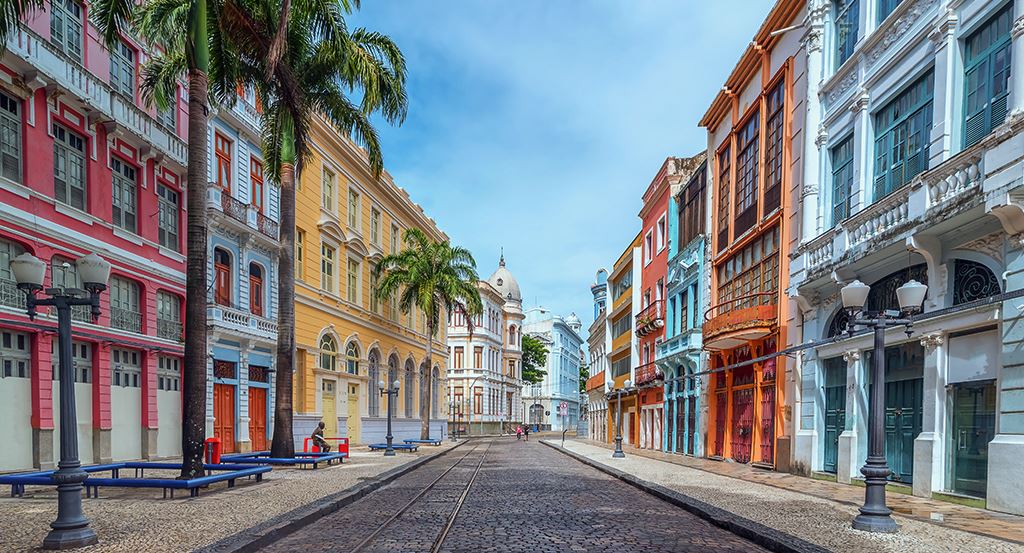
The Bom Jesus Street is considered one of the prettiest streets in the World.

In its almost 600 years of age and History, the city is a woven knit of culture influenced by Portuguese, Dutch, and African Heritage, symbolizing the diversity and original flavor only Brazil can offer. Geographically a river archipelago, Recife displays beautiful bridges and authentic Colonial Architecture from the time Maurice of Nassau took inspiration from Venice in how to take advantage of the rivers to create a tropical metropolis.

Where

A little heads up: I might be a little biased about this subject. I grew up in Recife and being surrounded by History and beautiful views is something you almost get used to. Almost.

Recife is the Capital of Pernambuco, one of the 26 Brazilian states. Its name comes from the word arrecifes, the reefs in the ocean, which were very favorable to the Portuguese when they arrived to the Brazilian Coast looking for a place to anchor their caravels. The area soon turned to be one of the first Brazilian ports, later on developing into one of the oldest cities in the country.

Recife has a lot of dynamic History, from Dutch invasion to Jewish immigration plus its original culture mixed from all the influences. What is left today? A vibrant city by the Atlantic Ocean waiting to be explored.

Learn More About Recife
Posted on Leave a comment

Are NFTs Worth Boiling the Earth?

Short answer: no. Do we really need a longer one?

To understand how NFTs affect the environment, we first need to understand a few concepts around it. NFTs are promoted online through bidding and sales, and even though some think the Internet is magic (sometimes I do), it is actually a network of various computers that store and transmit information to each other around the world. The whole process requires a lot of electrical power to work properly and, therefore, produces a lot of heat.

The combination of the transactions behind NFTs (powered by Ethereum, a crypto  and small contracts marketplace) and data storage overall increase carbon emissions in the atmosphere. As a platform that promotes the future of trades and the way we consume art as a society, it would be expected that NFTs would be more climate sensitive, especially following the recent trend behind major corporates to rely on sustainable methods as a marketing stunt. It’s overwhelming to see yet another futile and powerful energy consumption bomb rise while we could be using money, technology and resources to promote alternative ways to appreciate art and culture.

Posted on Leave a comment

Buying Tweets? NFTs are getting crazier

Hey, rich people! I could use some money and I have about 16,000 tweets I can sell. Anyone?

Here’s me saying something revealing in a language you probably don’t know

Okay, I might be a little flustered after learning that Twitter founder Jack Dorsey’s World’s first tweet (“just setting up my twttr”) was sold for $2.9 million in 2021 to Sina Estavi, a crypto entrepreneur from Iran. During the process, the bidding multiplicated in six times its previous value before closing.

This story comes with a twist: more recently, in 2022, Sina tried reselling the tweet, or better saying, the proof of ownership of it, and bombed. Aiming for $48 million, the bidding went as high as $280, and it stayed there. Apparently he was also arrested, as his company goes through rough waters. I guess I’ll keep my tweets to myself.

Posted on Leave a comment

Art NFTs: I googled it so you don’t have to

As an avid Twitter user, I’m constantly bombarded with random discussions (thanks, Elon Musk) that hardly come with context or breakdown points. Therefore, it comes as no surprise that my timeline is usually flooding with very predefined POVs regarding Art NFTs, even though I personally had no idea of what all the fuss was about. I just know that it was important for me to pick a side and chose if I think they’re good or bad (there’s no between!), and if you’re anything like me you probably considered doing some quick research before making a personal statement, but got a little demotivated by the long tech magazine articles and cryptocurrency terms.

In simple terms, NFT stands for non-fungible tokens, which basically means that instead of creating a cryptocurrency that you can actually trade and share value, whatever you own as an NFT is unique and it belongs only to you. That concept gets blurry when we see NFTs being applied towards digital art, that can be pirated, copied, replicated, screen-captured, tweeted, you name it. In other words, the NFT itself isn’t the art you own, but something that proves you own it, a form of document that can’t be copied. What do you do with that? Brag about it, I guess.

On the other hand, there’s a promising side, as crypto transactions get more popular over time and promise a more technologically advanced future. Some understand NFTs as a digital art collecting culture, that include bids as high as $69 million. It’s is an interesting way to put value to digital artists that are creating innovating content that might’ve experienced piracy before.

Get to know if I’ve decided how I feel about it in my next posts.